


Ambient Scribing Powered by Corti: The Integrator's Guide
Power your scribe with Corti for best-in-class accuracy, reliability, and scalable clinical automation
Healthcare organizations are turning to ambient documentation to reduce administrative load, improve clinical accuracy, and streamline patient workflows. The quality of these solutions depends on the strength of the underlying AI stack. Corti provides a purpose-built healthcare infrastructure that combines medical-grade speech recognition, clinically aligned text generation, and a reasoning engine to produce reliable, compliant documentation.
These capabilities create a unified system that achieves high accuracy, reduces clinician editing time, and ensures safe use of AI in regulated healthcare environments. With Corti, technology providers gain a consistent and scalable foundation for ambient scribing that seamlessly integrates into their end users' clinical workflows and adapts across various specialties and care settings.
This document highlights the unique value of an ambient scribe powered by Corti. It summarizes why purpose-built healthcare infrastructure results in higher performance than generalist AI stacks, explains how Corti’s speech recognition and text generation technologies improve documentation quality, and outlines the measurable benefits for clinicians and patients.
What sets Corti-powered ambient scribes apart
- Higher clinical accuracy supported by medical-grade speech recognition and deep medical terminology coverage.
- Reliable outputs through structured text generation, clinical reasoning layers, and hallucination mitigation.
- Lower correction burden for clinicians due to concise, complete, and grounded notes.
- Seamless workflow integration enabled by an API-first design and native embedding options.
- Built-in compliance aligned with HIPAA, GDPR, SOC 2, ISO 27001, and MDR requirements.
- Scalable and flexible solution underpinned by architecture that supports multi-language deployments across specialties and care teams.
- Continuous performance improvement through regular model updates across ASR and text generation, backed by a leading European AI lab dedicated to healthcare.
Market need
Clinical documentation has become one of the largest sources of administrative burden in healthcare. Across markets and care settings, clinicians spend a significant portion of their day capturing, structuring, and completing records that are required for compliance, billing, and continuity of care. This workload continues to increase, while the clinical workforce remains under strain.
Several factors underline the scale of the problem:
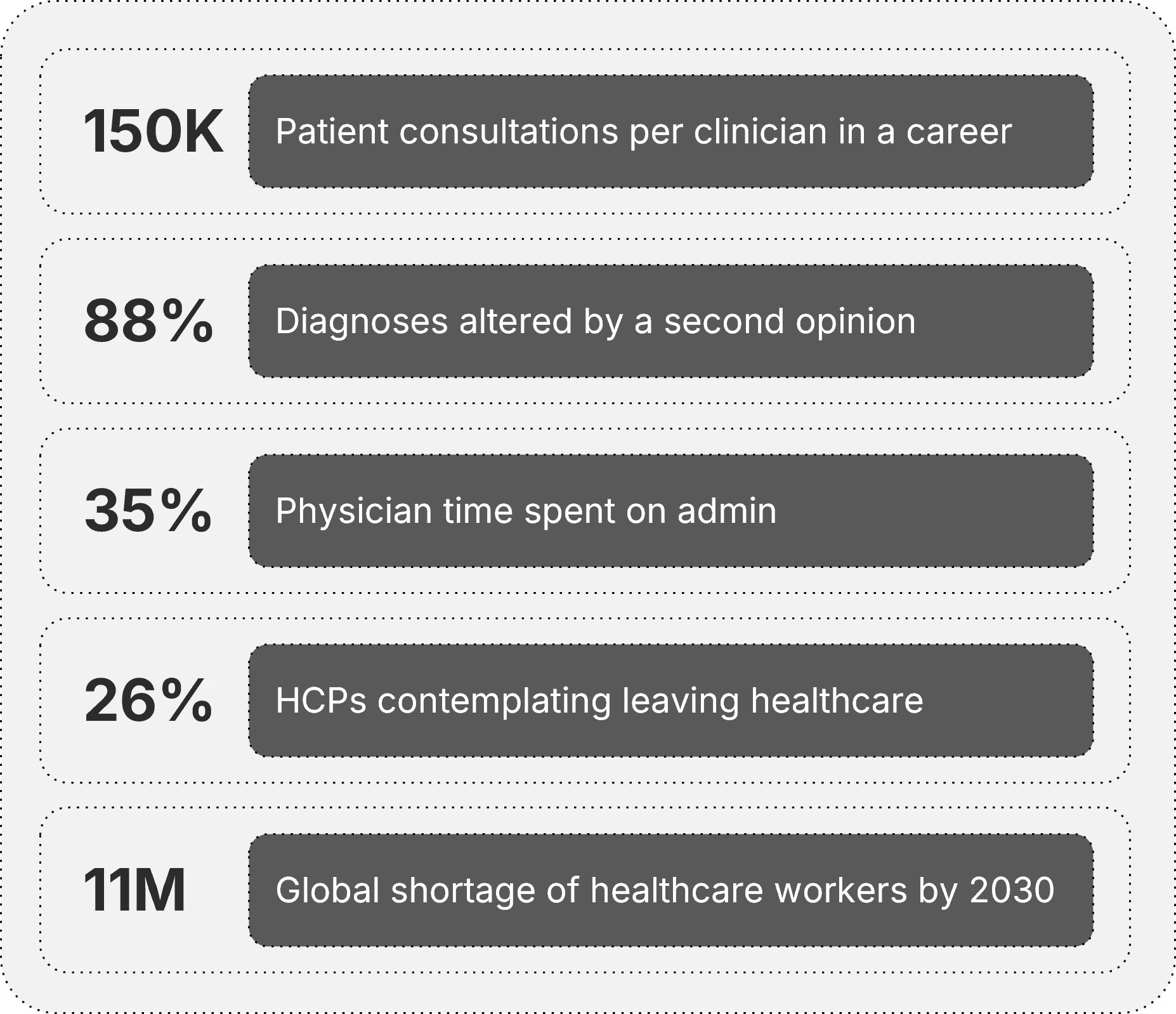
- Clinicians complete more than 150,000 patient consultations over a career, each requiring structured documentation that must be reviewed and finalized.
- Thirty-five percent of a physician’s time is spent on administrative work rather than direct patient care, contributing to burnout and reduced patient access.
- Twenty-six percent of healthcare professionals are considering leaving the field, with documentation load frequently cited as a major driver.
- Global forecasts estimate an 11 million worker shortfall in healthcare by 2030, meaning efficiency gains are essential for care continuity.
Documentation is also directly tied to clinical safety. 88% of diagnoses are altered when reviewed by a second opinion, which emphasizes how critical clarity, completeness, and accuracy are in the medical record. Any missing information, ambiguous phrasing, or incorrect interpretation can influence clinical decision-making.
At the same time, expectations around documentation continue to expand. Clinical notes are increasingly used for coding, referral automation, quality measurement, risk scoring, care coordination, and downstream analytics. Yet the workflow to produce these notes remains largely manual.
Why this creates systemic challenges
- Clinicians spend evenings and weekends completing records (“pajama time”).
- Documentation quality varies by individual skill, time pressure, and fatigue.
- Important clinical details risk being missed when captured manually.
- EHR workflows are not designed to reduce cognitive load or free time for patient care.
- Patients wait longer for care because clinicians must manage documentation duties.
Why ambient scribes are needed
Ambient scribing technology captures clinical conversations, extracts relevant content, and generates structured documentation automatically. This reduces the manual burden and allows clinicians to shift their focus back to patient care.
Ambient scribes address several core challenges:
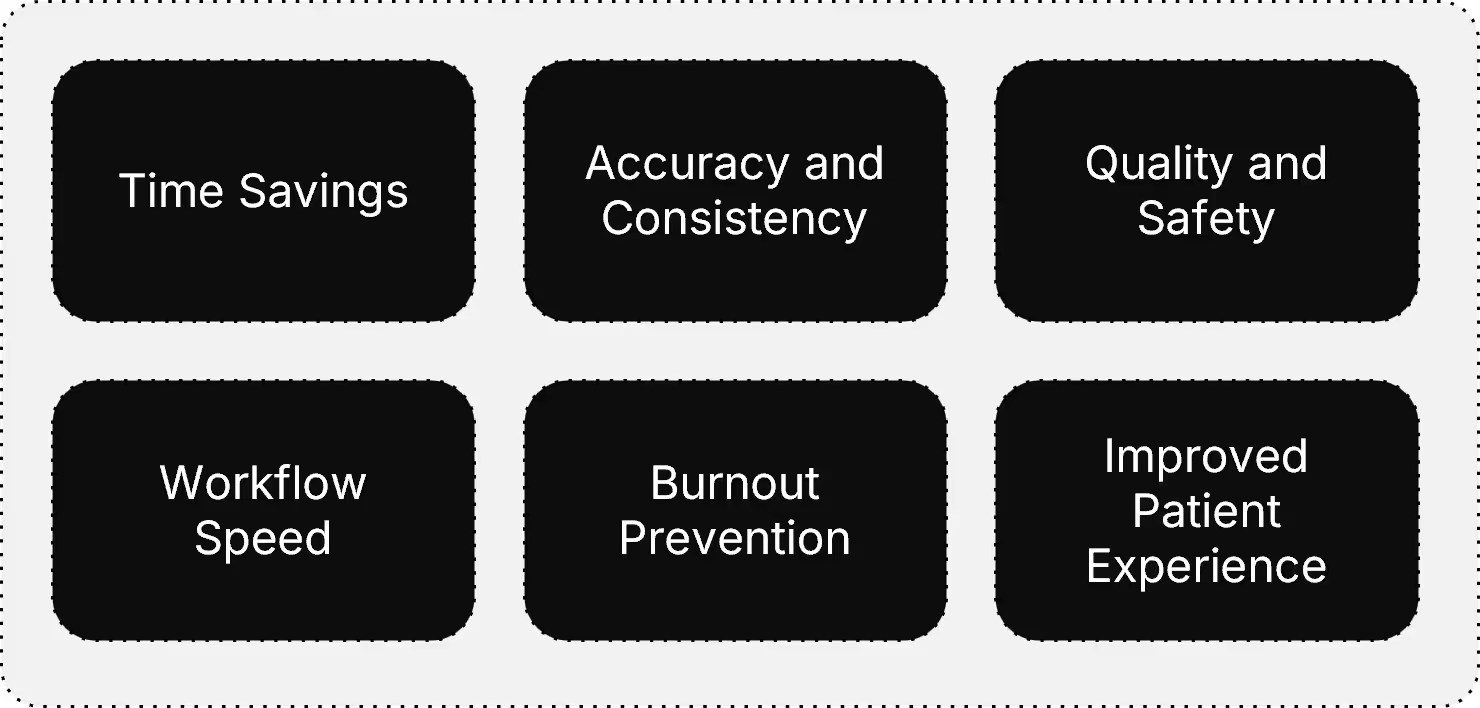
- Time savings: By reducing or eliminating manual typing and template navigation.
Clinicians using ambient AI showed a statistically significant decrease in average time spent on notes per appointment (Sutter Health), dropping from 6.2 mins to 5.3 mins. Another report showed 45% reduction in time demand across participants (Mayo Clinic Report) - Accuracy and consistency: By standardizing summaries and reducing missed details.
Quality scores for the AI tool-assisted notes and letters were higher than those created using the standard EHR, for both letters (proportion scoring >25; 70% with AI tool versus 29% without) and notes (proportion scoring >25; 100% with AI tool versus 43% without, indicating improved completeness and content within the allocated time of the study. (NHS Study - Pub Med) - Quality and safety: Through more complete and clinically aligned records.
Studies show up to a 60 percent increase in documentation quality with an AI scribe compared with standard documentation, resulting in more complete notes and more accurate information for downstream workflows and patient care. - Workflow speed: By accelerating tasks like letters, referrals, coding hints, and follow-ups.
Usability System Scale (SUS) scores were significantly higher with the ambient AI scribe than the existing EHR documentation experience. Participants in the ambient AI group navigated significantly fewer EHR screens and performed fewer clicks per encounter. (Stanford Report) - Burnout prevention: By reducing after-hours administrative work.
Use of an ambient AI scribe was associated with statistically significant decreases in task load and burnout (50% reduction in mental demand). - Improved patient experience: More clinician time focused on the patient and fewer documentation errors.
In the US today, clinicians spend nearly 50% of their time on documentation and administrative work and only 27% on face-to-face patient interaction (Mayo Clinic Report). With ambient AI, clinicians can spend more time focused on the patient rather than typing on their computer.
As clinical complexity increases and workforce pressure grows, ambient scribing has shifted from a workflow enhancement to a foundational requirement for sustainable care delivery. The success of these tools, however, depends on the accuracy and safety of the underlying AI infrastructure.
But not all ambient scribes are created equal.
- Generalist vs purpose-built stacks: Most ambient scribes rely on general-purpose models not built for clinical language or workflows.
- Consequences: These tools can deliver lower accuracy, frequent hallucinations, and require more clinician editing.
- Clinical risk: Unreliable AI output in healthcare can lead to missing details, misinterpretation, and patient safety concerns.
- Scalability and performance: Without end-to-end control, other scribes are a the whims of generalist LLM provider updates and struggle to adapt to specialized clinical needs or improve reliably over time.
This is where a scribe powered by Corti stands apart.
A foundation for next-generation ambient scribes
Corti brings together deep healthcare expertise and a modern AI infrastructure foundation to power ambient scribing with high accuracy, reliability, and workflow fit. The platform provides ready-made capabilities for medical-grade speech recognition, clinically aligned text generation, and structured reasoning, allowing ambient scribe solutions to operate consistently across specialties and care settings.
In the market for ambient documentation, several categories of solutions have emerged:
- Point solutions built on generalist infrastructure that deliver basic transcription or summarization but rely on non-medical models. These solutions often show lower medical accuracy, fragmented workflow integration, and a high correction burden for clinicians.
- EHR-embedded scribes built on generalist infrastructure that offer convenience through native placement inside the clinical workflow, but still inherit the limitations of the underlying generalist models. They struggle with clinical terminology, produce inconsistent summaries, and require significant clinician review.
- Status quo manual documentation, where no ambient scribe is used. This leads to high time burden, no automation, and lower documentation consistency across clinicians and encounters.
Corti-powered scribe solutions stand apart from these categories. Ambient scribing solutions built on Corti’s purpose-built healthcare foundation combine high medical accuracy, structured clinical reasoning, template alignment, and seamless workflow integration. This gives healthcare organizations a reliable, compliant, and scalable ambient scribing option that reduces editing time, supports diverse clinical specialties, and improves the overall documentation experience.

Why choose an Ambient Scribe powered by Corti?
A Corti-powered scribe benefits from a core architecture built specifically for healthcare. Unlike generalist solutions that rely on stitching together multiple third-party models, Corti offers a unified infrastructure for speech recognition, text generation, and reasoning. As a result, individual clinicians using Corti-powered scribes can save up to 70 minutes per day, spending 50% less time on documentation compared to manual workflows. This represents a greater than 3x productivity gain than even the highest-performing scribes measured in a recent NEJM study (NEJM, November 2025), all of which were built on generalist infrastructure.
Corti controls the entire pipeline through its proprietary infrastructure that powers every step of the ambient workflow. This includes:
- Audio processing
- Speech recognition
- Clinical reasoning
- Template-based note generation
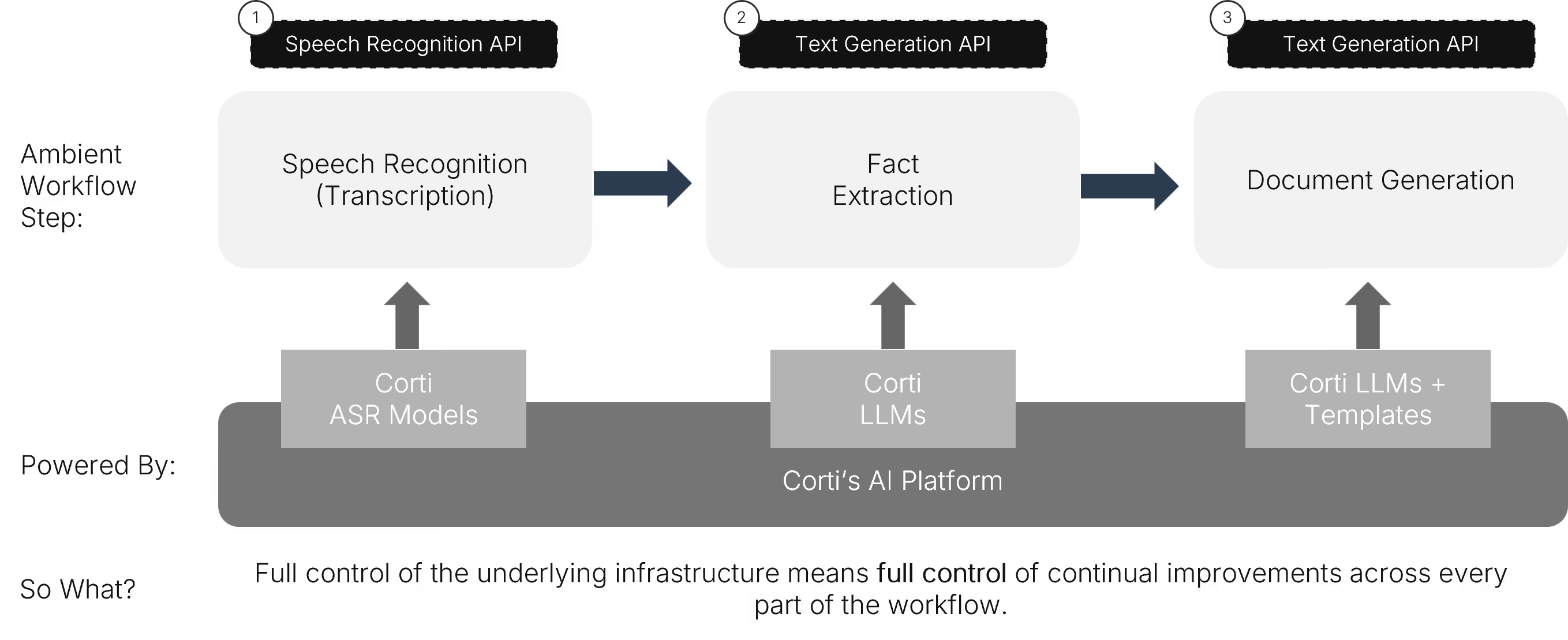
This end-to-end ownership increases stability and quality because improvements deployed in one layer benefit the entire pipeline. Corti controls the whole step-by-step process rather than relying on a mix of external ASR and general-purpose LLMs. Corti iterates rapidly, releasing quarterly model updates across 14+ languages, with clinical accuracy improvements reflected directly in partner products.
To end users, this results in higher note quality and less time correcting outputs.
Clinical speech recognition pipeline underpins accuracy.
Corti’s speech recognition is purpose-built for healthcare, giving clinicians more accurate notes, less correction work, and a safer documentation experience. By using proprietary medical-grade ASR instead of general-purpose models, a Corti-powered scribe deeply and consistently understands clinical terminology, specialty-specific language, and the rhythm of real encounters, which directly improves the quality of ambient documentation.
Higher accuracy with less clinician editing
Corti’s ASR is validated against one of the largest medical lexicons in the industry, enabling precise capture of diagnoses, medications, procedures, and clinical findings. This reduces the correction burden and improves first-draft quality.
Benefits for clinicians:
- Fewer transcription errors
- Less time correcting medical terminology
- More complete and consistent documentation on the first pass

Corti’s focus on clinical language means our models achieve higher medical term recall and accuracy than general-purpose systems, ensuring that every diagnosis, treatment, and detail is captured reliably, whether in general practice or highly specialized care. This directly impacts how much work clinicians must do to finalize a note.
Safer transcription that captures critical details
Accurate speech recognition is a foundation for safe and reliable clinical documentation. Higher medical term recall ensures that important symptoms, findings, and care decisions are captured correctly.
Benefits for clinicians and patients:
- Reduced risk of missing key clinical details
- More faithful transcripts enabling safer downstream reasoning
- Better and more accurate outputs for use in referrals, letters, and structured downstream automation
Because Corti’s ASR handles real clinical language and specialty-specific terminology, clinicians in complex domains such as cardiology, oncology, or endocrinology benefit from a system that understands their vocabulary rather than guessing.
A purpose-built ASR pipeline that adapts to clinical needs
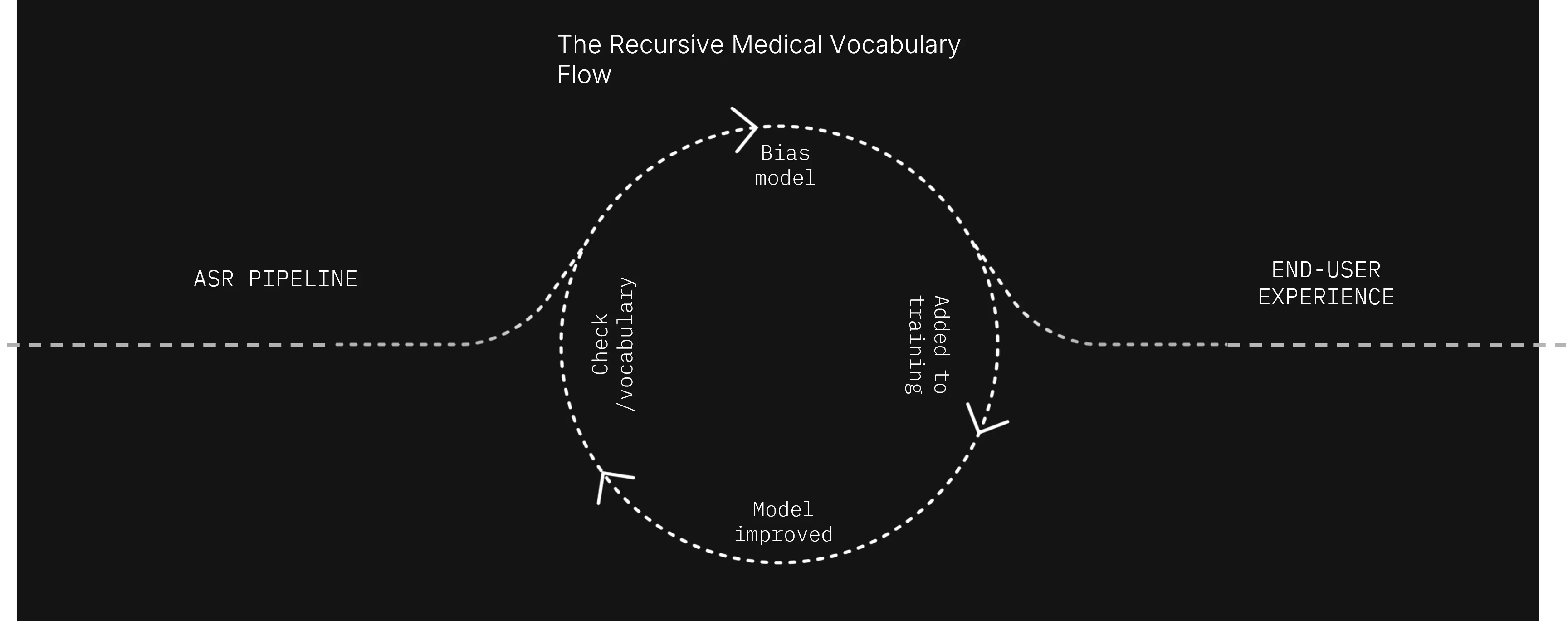
Corti builds and maintains a full speech recognition pipeline that adapts to clinical requirements as we learn from end users in the clinical setting. Owning the entire stack supports fast iteration, precise tuning for specialties, and consistent advancement that general-purpose systems cannot match.
Benefits for clinicians:
- Faster fixes to misheard terms
- Adaptation to new specialty language and evolving terminology
- More reliable performance across accents, noise, and telehealth audio
- Regular quarterly model updates across fourteen-plus supported languages
This flexibility gives clinicians a scribe that keeps improving and remains aligned with real-world clinical practice. Because ASR is upstream from every AI step, stronger transcripts lead to:
- More accurate summaries
- Better coding suggestions
- More reliable workflow automation
A Corti-powered scribe produces documentation that is not only more accurate, but also easier to review, safer for patients, and more supportive of downstream tasks.

Learn more:
- Speech Recognition API
- Speech Recognition Documentation
- Why voice-first healthcare AI needs medical-grade ASR pipelines
- 8 problems that make healthcare the world's hardest language
- Introducing Medical Term Recall
Text generation and medical reasoning engine produces accurate and actionable documentation.
Corti’s text generation system is designed for clinical reliability, consistency, and safety. Instead of relying on single-step prompts to general-purpose language models, a Corti-powered scribe uses structured reasoning, clinical safeguards, and healthcare-tuned generation methods to produce notes that clinicians can trust with minimal editing. This results in clearer documentation, fewer hallucinations, and a more predictable review process.
More faithful summaries grounded in the actual encounter
Corti’s medical reasoning engine uses multi-step processing to keep outputs aligned with the spoken consultation. FactsR isolates clinically relevant details before any full note is generated. This significantly reduces hallucinations, protects against incorrect clinical statements, and ensures the summary reflects what was actually said.
Corti's FactsR medical reasoning engine drives:
- Completeness as measured by a 49% reduction in missing clinical content
- Conciseness as measured by a 86% reduction in extraneous detail
- Groundedness of 94%, comfortably above clinician-reference notes, demonstrating high faithfulness to the source conversation as compared to typical clinician notes.

Benefits for clinicians:
- Notes that stay true to the encounter
- Fewer incorrect or invented details
- Reduced risk of documentation mismatches
- More confidence in the accuracy and safety of the note
General-purpose LLMs often drift from the transcript, adding unnecessary or incorrect information. FactsR prevents this by enforcing grounding early in the workflow.
More complete and structured notes with less variability
Corti uses a structured generation approach that moves from extracted clinical facts to full templated outputs. This keeps notes consistent across clinicians and encounters, reduces variability, and aligns documentation with clinical expectations such as SOAP, HPI, or specialty-specific formats.
Benefits for clinicians:
- Less back-and-forth refinement
- Clear, predictable note structure
- Fewer missing details
- Easier review, signing, and downstream handoff
Because the system works from structured clinical information rather than free-form generation, it consistently captures the important elements of the visit without inflating note length or omitting key findings.
Better downstream automation and safer follow-on workflows
Accurate reasoning and structured generation create more reliable inputs for downstream tasks. Documentation becomes a stable foundation for coding suggestions, letters, referrals, patient instructions, and other automated workflows. A predictable, clinically aligned note supports operational efficiency beyond the encounter itself. Clinicians save time not only during review, but across the entire post-visit workflow.
Corti controls the entire text generation stack, allowing quick adaptation to new specialties, note formats, or clinical workflows. Generalist LLMs cannot offer this level of flexibility, predictability, or safety because they are not designed around healthcare constraints.
For clinicians, this means:
- A scribe that continues to improve over time
- Notes that stay consistent even as clinical language evolves
- A safer, more reliable workflow
- Less cognitive load during chart review
A Corti-powered scribe produces documentation that is complete, clinically aligned, and ready for downstream use, giving clinicians a more trustworthy and efficient documentation experience.
Learn more
- Text Generation API
- FactsR. The thinking engine behind better clinical AI
- Asynchronous FactsR™ : A cleaner reasoning layer for complex LLM pipelines

Build on a healthcare-first frontier AI partner.
When you build with Corti, you're building with a frontier AI lab in Europe dedicated entirely to healthcare. Our models, reasoning systems, and safety controls are purpose-built for clinical language and clinical workflows, not adapted from general-purpose AI. This gives your product a stronger accuracy foundation, deeper control over terminology, and a technical stack that scales across specialties without relying on monolithic generalist infrastructure.
Because Corti owns the full healthcare AI pipeline, your scribe is supported by an architecture with built-in compliance, traceability, and clinical guardrails. Every component is designed for regulated environments, enabling higher reliability and fewer downstream errors compared to solutions assembled from third-party generalist models.
As Corti advances its speech recognition, medical reasoning, and agentic automation capabilities, those improvements flow directly into your product. Your end users stay within your software and their existing interfaces while benefiting from continuous accuracy gains and product enhancements, organically rolled out.
Partnering with Corti means building on top of a platform that is purpose-built, clinically aligned, and continually evolving toward better healthcare automation. This foundation strengthens your product’s performance today and positions it to take advantage of future advances in clinical AI tomorrow.
Strategic takeaways
Scribes powered by Corti are built for clinical reliability and scale. Scribes built on Corti operate on a healthcare-only AI foundation, giving them accuracy, safety, and stability that generalist-based solutions cannot match. Because Corti owns and orchestrates the entire speech-to-note pipeline, partners gain a product rooted in domain expertise, full-stack control, and rapid innovation.
Key differentiators:
- More accurate.
Medical-grade speech recognition and healthcare-tuned reasoning deliver higher medical term recall, more complete notes, and fewer hallucinations, even in complex encounters. - More reliable in diverse clinical environments.
Purpose-built vocabulary, structured reasoning, and large context windows ensure the scribe performs consistently across specialties, accents, and fast-paced conversations. - Powered by a frontier AI lab dedicated entirely to healthcare
Corti focuses solely on healthcare AI clinical automation. Safety, compliance, and traceability are built into the architecture, not patched on top of generic models. - Backed by full control over the entire pipeline
ASR, medical reasoning, and text generation and clinical LLM orchestration are all owned entirely by Corti, giving partners a stable foundation and the ability to benefit from continuous improvements across every layer. - Faster to improve and easier to evolve
Corti releases frequent model updates across ASR and text generation, enabling partners to ship a scribe that improves over time without relying on fragmented third-party infrastructure. - Designed to support complex care, not break under it
Healthcare-specific terminology, structured extraction of clinical facts, and high-capacity reasoning allow the system to handle multi-problem visits, specialty encounters, and detailed assessments without drifting or missing key details. - Built on a cohesive, proprietary platform that functions as a unified system
Every component of the Corti ecosystem works together to serve our builders and in tern their end users. From audio capture to reasoning to template generation, building on Corti ensures a smoother, higher-quality experience than solutions stitched together from separate ASR and LLM vendors.
Corti gives partners the precision, control, accuracy, and continuous innovation of a healthcare-dedicated AI lab, enabling them to deliver an ambient scribe that outperforms competitors and establishes a long-term foundation for advanced clinical automation.
Need help planning your build?
Book a scoping call with our team to discuss your goals and get set up faster. Whether you’re still exploring or ready to start, we’re happy to chat.
AI infrastructure for healthcare developers
Ship specialized healthcare workflows faster with all the building blocks in one platform, accessible through our API.