


How the Corti Agentic Framework extends A2A and MCP for healthcare agents
What A2A does
A2A (Agent-to-Agent) is an open protocol that defines how agents communicate with each other. Originally developed by Google and now stewarded under the Linux Foundation, A2A gives agents a common language for collaboration.
Agents can discover each other, negotiate tasks, exchange messages, and coordinate on complex workflows. This works across frameworks, programming languages, and vendors.
How Corti uses A2A:
- The orchestrator uses A2A to delegate tasks to experts
- Experts can call other agents, including external ones you build
- Third-party services that support A2A can participate in your workflows
- Your application talks to Corti agents the same way it would talk to any A2A-compliant system
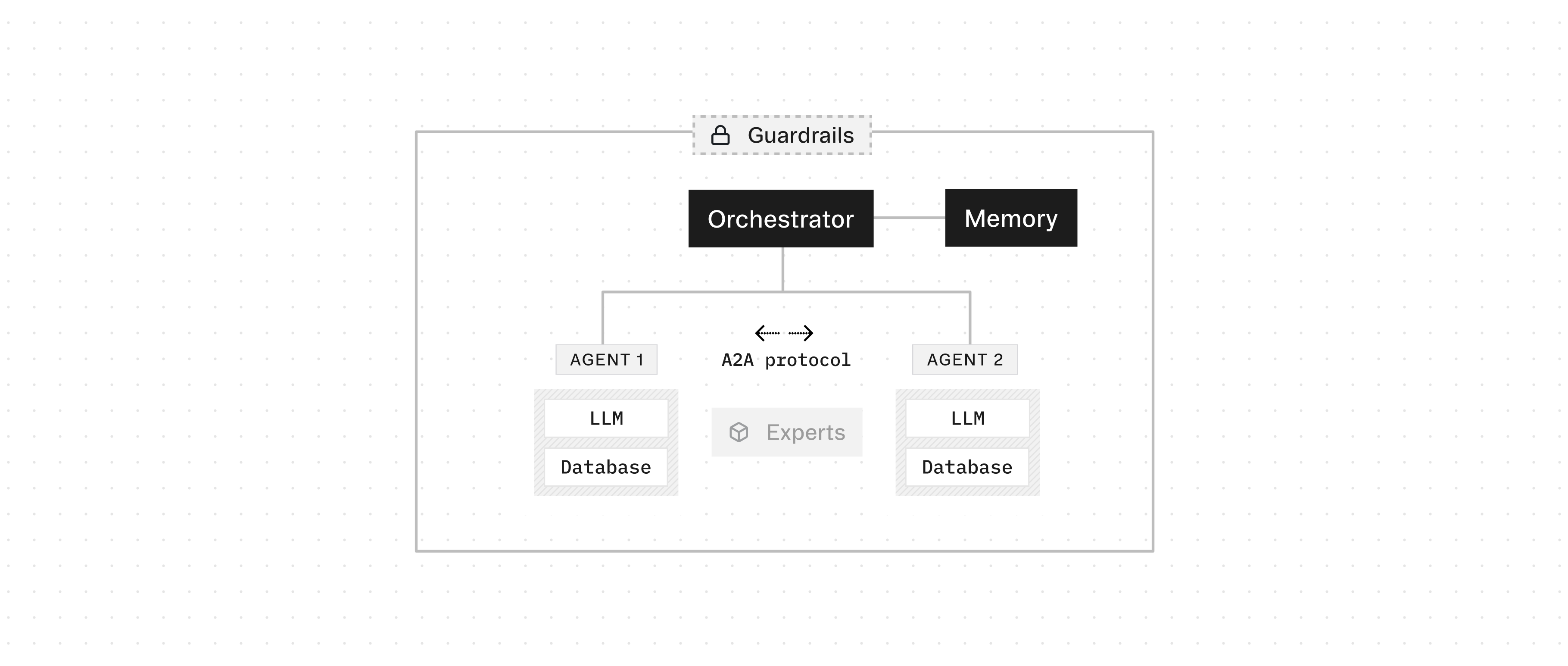
A2A is the backbone for agent collaboration in the framework. Everything speaks the same language.
What MCP does
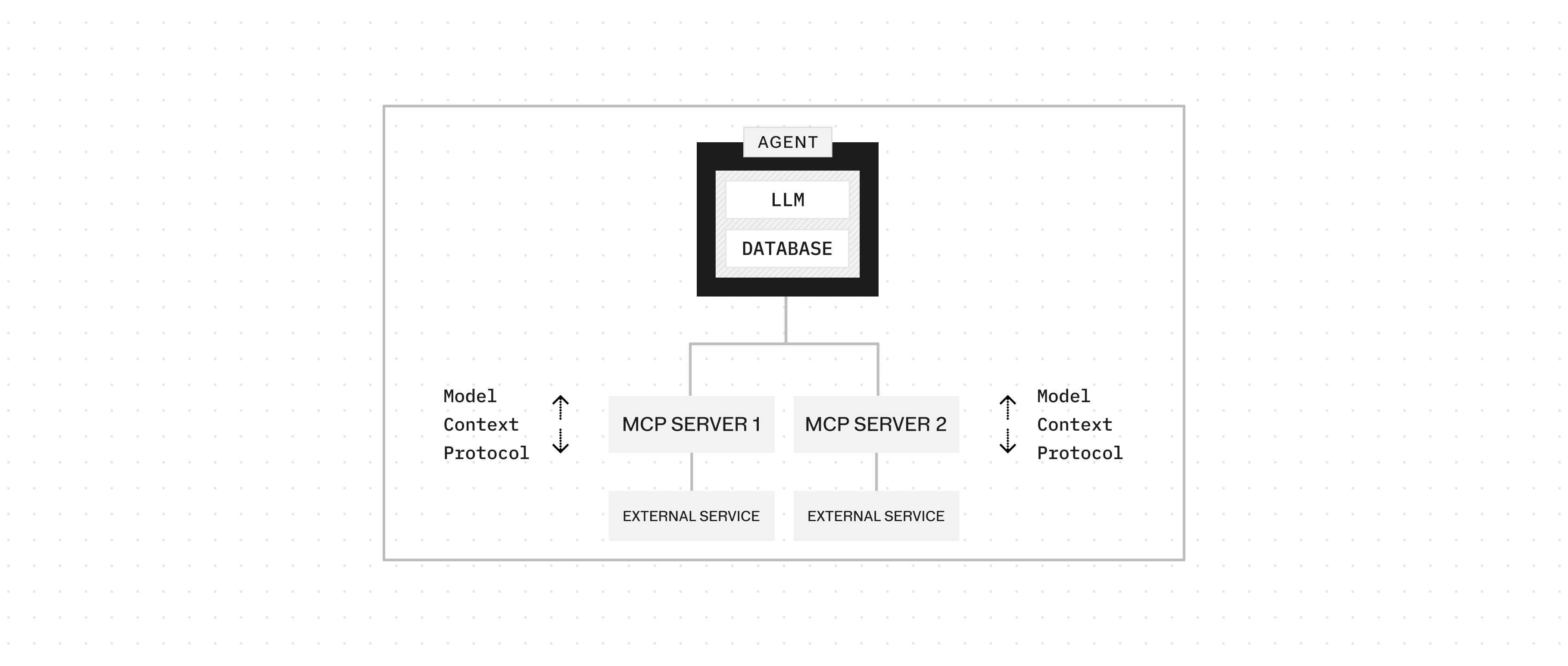
MCP (Model Context Protocol) defines how agents connect to external tools and services.
When an expert needs to query an EHR, check a formulary, or call an external API, MCP provides the interface. It standardizes how agents discover available tools, understand their capabilities, and invoke them safely.
Why this matters for healthcare:
Healthcare workflows touch many systems: EHRs, pharmacy databases, billing systems, scheduling platforms, clinical guidelines repositories. MCP lets you connect agents to these systems without building custom integrations for each one. If a tool supports MCP, your agents can use it.
All pre-built experts in the Corti framework are MCP-compatible. When you bring your own experts, you expose them as MCP servers and the orchestrator can call them alongside the built-in ones.
The case for open protocols
Proprietary agent frameworks create dependency. You build on their abstractions, their tool interfaces, their communication patterns. When you need something they do not support, you are stuck.
What building without open protocols looks like:
- Custom integrations for every system you need to connect
- Agents that cannot communicate with agents built on other frameworks
- Rebuilding integrations when you switch vendors or add new components
- Tool interfaces that only work within one ecosystem
- Platform limitations that become your limitations
This is technical debt that compounds. Every custom integration is a maintenance burden. Every proprietary abstraction is a dependency you cannot escape without rewriting.
Open protocols change this. A2A and MCP are not controlled by any single vendor. They have open specifications, open source SDKs in multiple languages, and growing ecosystems of compatible tools and agents.
What this means in practice:
- Connect agents built in different programming languages
- Integrate third-party agent services that support A2A
- Swap components without rewriting your entire stack
- Avoid rebuilding integrations if you change vendors
Future-proofing your investment. AI agent ecosystems are evolving rapidly. New tools, new services, new capabilities emerge constantly. Open protocols mean you are not betting on one vendor's roadmap. The agents and integrations you build today will interoperate with whatever emerges tomorrow.
You are building on standards, not proprietary abstractions. That is a foundation that grows with you.
What Corti adds on top
Open protocols provide the communication layer. Corti adds the healthcare-specific infrastructure.
Orchestration and coordination. The orchestrator manages multi-agent workflows, handles parallel execution, and synthesizes results. You configure behavior. Corti handles the complexity.
Guardrails and governance. Safety constraints enforced at the infrastructure level. Audit trails for compliance. Data isolation between tenants.
Pre-built experts. Medical coding, drug interactions, clinical calculators, literature search, guideline retrieval. Ready to use, MCP-compatible, maintained by Corti.
Memory and context. Persistent state across interactions. Semantic retrieval of relevant information. Context scoped appropriately to each expert.
Compliance infrastructure. HIPAA, SOC 2, audit trails. Already certified and maintained.

The protocols ensure you are not locked in. The infrastructure ensures you do not have to build everything yourself.
Extensibility by design
If you need to connect an external agent service, you can. If you need to build custom experts in your own stack and have them coordinate with Corti's orchestrator, you can. The framework is designed to interoperate.
Expose your tools as an MCP server. Register your agent with the framework. The orchestrator calls it alongside the pre-built experts. Your proprietary data sources, internal systems, and custom logic integrate without friction.
Open standards at the foundation. Healthcare infrastructure on top. Extensibility built in.
More guides to explore

Build faster. Ship safer. Scale smarter.
Get started with healthcare-native APIs built to power real clinical workflows.